
Air sealing
Stop the Drafts. Start at the Source.
Air sealing closes the hidden gaps and cracks that drive up your bills and create uncomfortable rooms — especially in older New Jersey homes where these leakage paths are widespread.
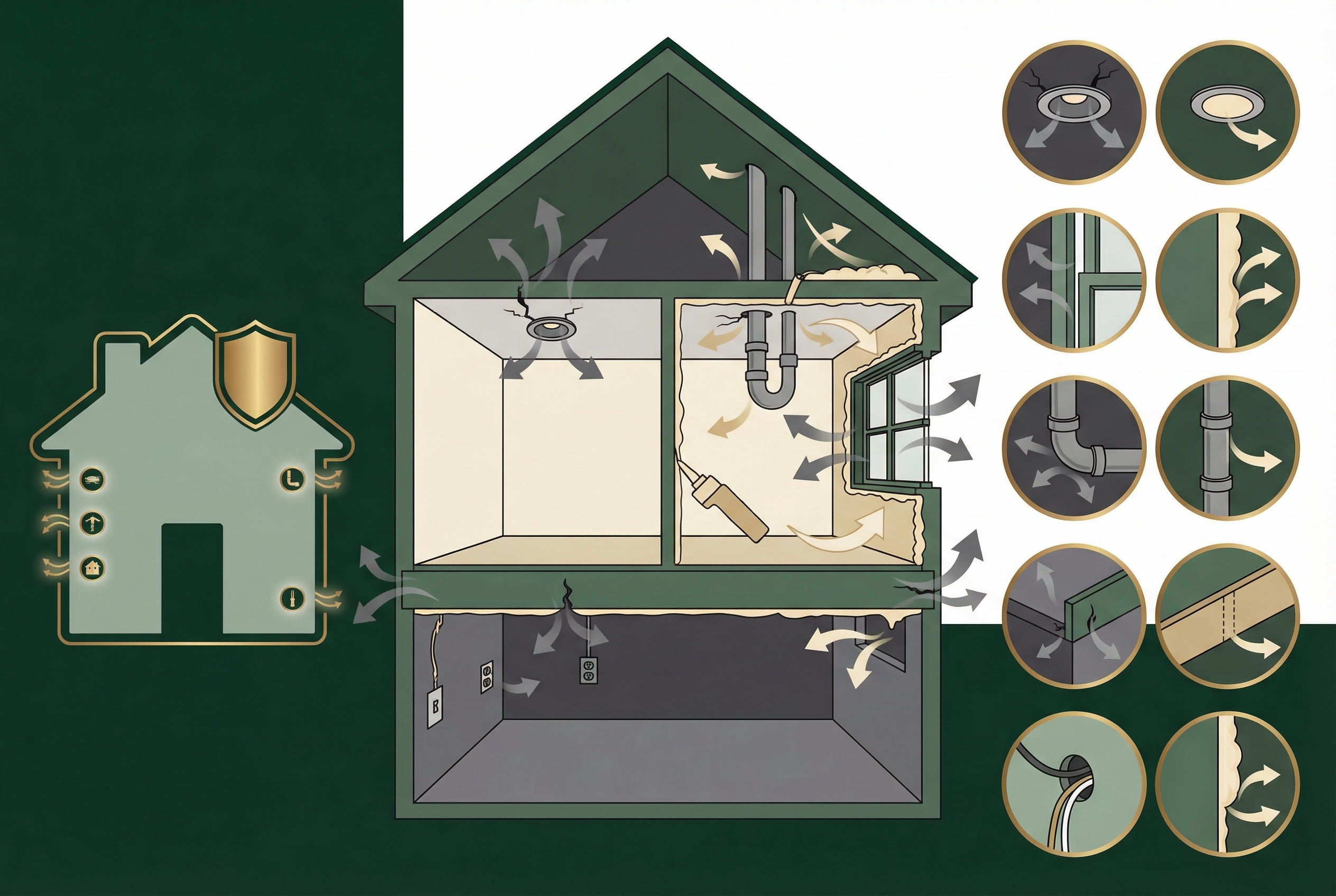
How air sealing works
Air sealing closes the gaps that let conditioned air escape and outside air sneak in.
A home can have insulation and still feel drafty if air is moving around it. Air sealing targets the hidden cracks and penetrations that drive comfort problems, energy waste, dust, and uneven temperatures. It is often the missing piece that makes the rest of the envelope work better.
- We focus on attic penetrations, can lights, rim joists, hatch openings, and leakage paths around windows and walls.
- The before-and-after difference is usually felt in fewer drafts and better temperature stability.
- Air sealing typically makes insulation upgrades more effective instead of letting them underperform.
Direct answer
What Is Air Sealing?
Air sealing is the process of finding and closing unintended gaps in your home's building envelope — the barrier between conditioned and unconditioned space. These gaps allow heated or cooled air to escape and outside air to enter, making your home less comfortable and more expensive to operate.
Unlike insulation, which slows heat transfer, air sealing physically stops air movement. The two work best together.
Common leakage areas
Where Homes Leak Most
- Attic floor penetrations around wires, pipes, and ducts
- Recessed light fixtures in ceilings below attic space
- Basement and crawlspace rim joists
- Around windows and doors (beyond what weatherstripping covers)
- Plumbing and electrical penetrations through exterior walls
- Attic hatches and pull-down stairs
What Affects the Scope?
- Age and construction type of the home
- Number and severity of leakage paths
- Whether insulation work is happening at the same time
- Accessibility of attic, basement, and wall cavities
Related Services
Air sealing works best as part of a coordinated envelope strategy.
Frequently Asked Questions
Is air sealing the same as weatherstripping?
Weatherstripping is one type of air sealing, but professional air sealing goes much further. It targets hidden gaps in the attic floor, basement rim joists, around pipes and wires, and other penetrations throughout the building envelope.
How do I know if my home has air leakage problems?
Common signs include drafts, uneven temperatures, high energy bills, and dust. A home performance assessment or blower-door test can identify and measure air leakage precisely.
Should air sealing be done before or after insulation?
Before or at the same time. Air sealing stops air movement, and insulation slows heat transfer. Doing air sealing first ensures the insulation performs at its best.
Can air sealing improve indoor air quality?
Yes. By controlling where air enters and exits the home, air sealing can reduce dust, allergens, and outdoor pollutants. Proper ventilation is maintained to ensure healthy air exchange.