Attic insulation
Your Attic Is the Highest-Impact Upgrade in Most NJ Homes
A properly insulated and sealed attic makes a measurable difference in comfort and energy cost — and often qualifies for utility and federal incentives.
What we do in the attic
The attic is usually the fastest way to stop major heat loss and overheating.
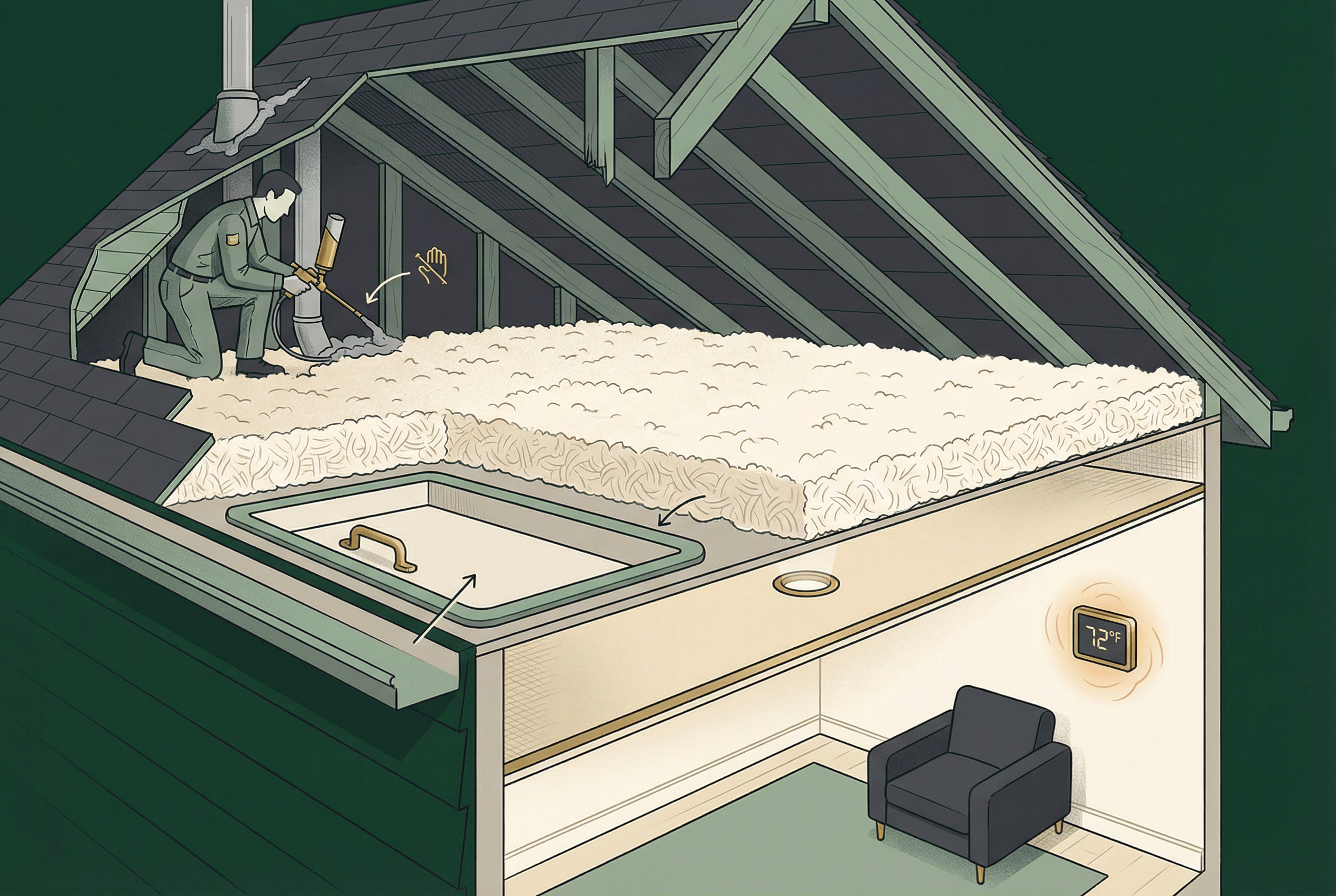
Because heat rises in winter and roof heat pushes down in summer, attic performance affects comfort all year. We usually start by sealing leakage points in the attic floor, then bring insulation up to a level that makes the upper floors easier to live in and less expensive to condition.
- Seal first, then insulate so the system works as intended.
- Address weak points like pull-down stairs, hatch covers, and uneven coverage.
- The payoff is often felt quickly on second floors and in rooms below the attic.
Direct answer
Why the Attic Matters Most
Heat rises. In winter, a poorly insulated attic lets that heat escape directly through the ceiling. In summer, a hot roof radiates heat downward into the living space. Either way, the attic is usually the single biggest energy-loss zone in the home.
Attic air sealing and insulation together typically deliver the most comfort improvement per dollar of any home performance upgrade.
Signs you need attic work
- Hot upper floors in summer, cold in winter
- HVAC works overtime to maintain temperature
- Ice dams forming along the roof edge
- Visible joists or thin insulation in the attic
- The home was built before 1990 and has not been upgraded
What We Do in the Attic
- Air seal all penetrations in the attic floor before insulating
- Add or replace insulation to meet current performance standards
- Address attic hatches, pull-down stairs, and other thermal weak points
- Ensure proper ventilation is maintained
Related Services
Attic work connects directly to other parts of the home's performance.
Frequently Asked Questions
How do I know if my attic needs more insulation?
If you can see the floor joists in your attic, or if insulation is thin, uneven, or compressed, it is likely underperforming. A hot second floor in summer or cold rooms in winter are strong indicators.
How much insulation should an attic have in New Jersey?
Current recommendations for NJ (DOE Climate Zone 4/5) call for R-49 to R-60 in the attic. Many older homes have R-11 to R-19 or less.
Does attic insulation help with cooling too?
Yes. Proper attic insulation reduces heat gain from the roof in summer, which is often the primary driver of hot upper floors and overworked air conditioning.
Should the attic floor or roof be insulated?
In most homes, insulating the attic floor is more effective and less expensive. Roof-line insulation is appropriate when the attic is conditioned living space.