
Basement & crawlspace
Cold Floors. Moisture. Drafts From Below.
We insulate and seal basements and crawlspaces to improve comfort throughout the home and address common moisture and air-quality issues that originate below the living space.
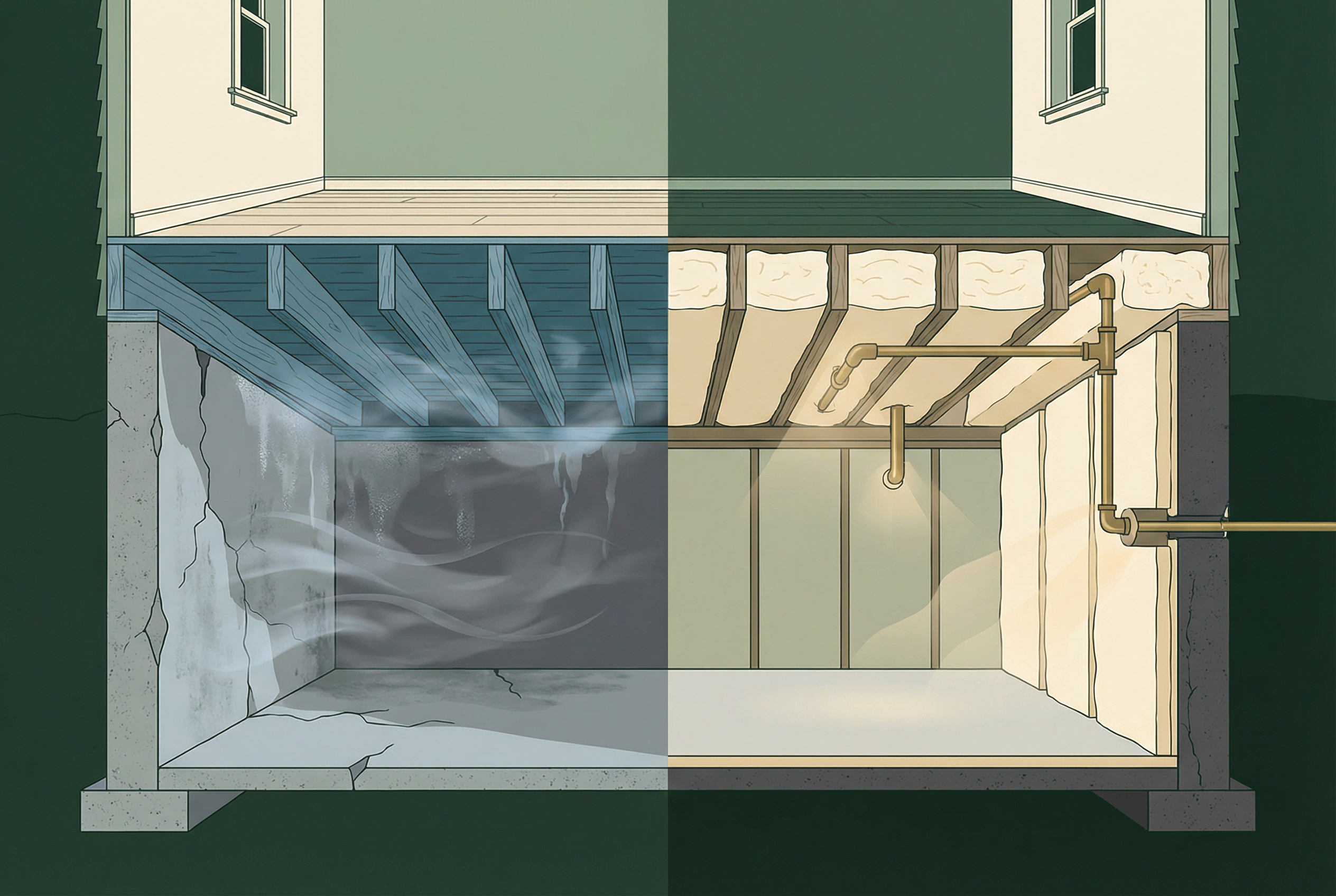
What changes below the living space
Lower-level insulation helps stop cold floors, moisture migration, and stack-effect losses.
Basements and crawlspaces often create comfort problems that show up upstairs. When the lower level is leaky or under-insulated, the home pulls cold air through the floor system and loses conditioned air through the top of the building. Improving the lower level helps stabilize the whole house.
- Rim joist work often produces outsized comfort gains.
- The right strategy depends on whether the lower level is conditioned, unfinished, or a crawlspace.
- Better lower-level control can reduce cold floors, mustiness, and overall energy waste.
Direct answer
Why Basements and Crawlspaces Matter
The space below your living area affects comfort, air quality, and energy use more than most homeowners realize. An uninsulated basement or crawlspace allows cold air to rise through floors, lets moisture migrate upward, and creates a stack effect that pulls conditioned air out of the home.
Signs you need this work
- Cold floors in winter, especially over garages or crawlspaces
- Musty smells or visible moisture in the basement
- Mold or mildew on basement walls or floor joists
- Drafts rising from the floor level
- Condensation on basement walls or pipes
What We Address
- Rim joist air sealing and insulation
- Basement wall insulation for conditioned spaces
- Floor insulation for unconditioned basements
- Crawlspace encapsulation and insulation
- Moisture management in conjunction with envelope work
Related Services
Frequently Asked Questions
Why are my floors cold in winter?
Cold floors almost always point to an uninsulated or under-insulated basement or crawlspace. When the space below the living area is not sealed and insulated, cold air migrates upward through the floor assembly.
Should I insulate the basement walls or the ceiling?
It depends on how you use the basement. If it is conditioned living space, insulating the walls is typically better. If unconditioned, insulating the ceiling (floor above) is usually more appropriate.
Does crawlspace insulation help with moisture?
Proper crawlspace insulation and encapsulation can significantly reduce moisture problems, improving indoor air quality and preventing mold and structural damage.