
Insulation
Insulation That Makes the Whole Home Work Better
Insulation helps slow heat flow, stabilize indoor comfort, and support more efficient performance across the house. The key is using it where it matters most and pairing it with the right supporting work.
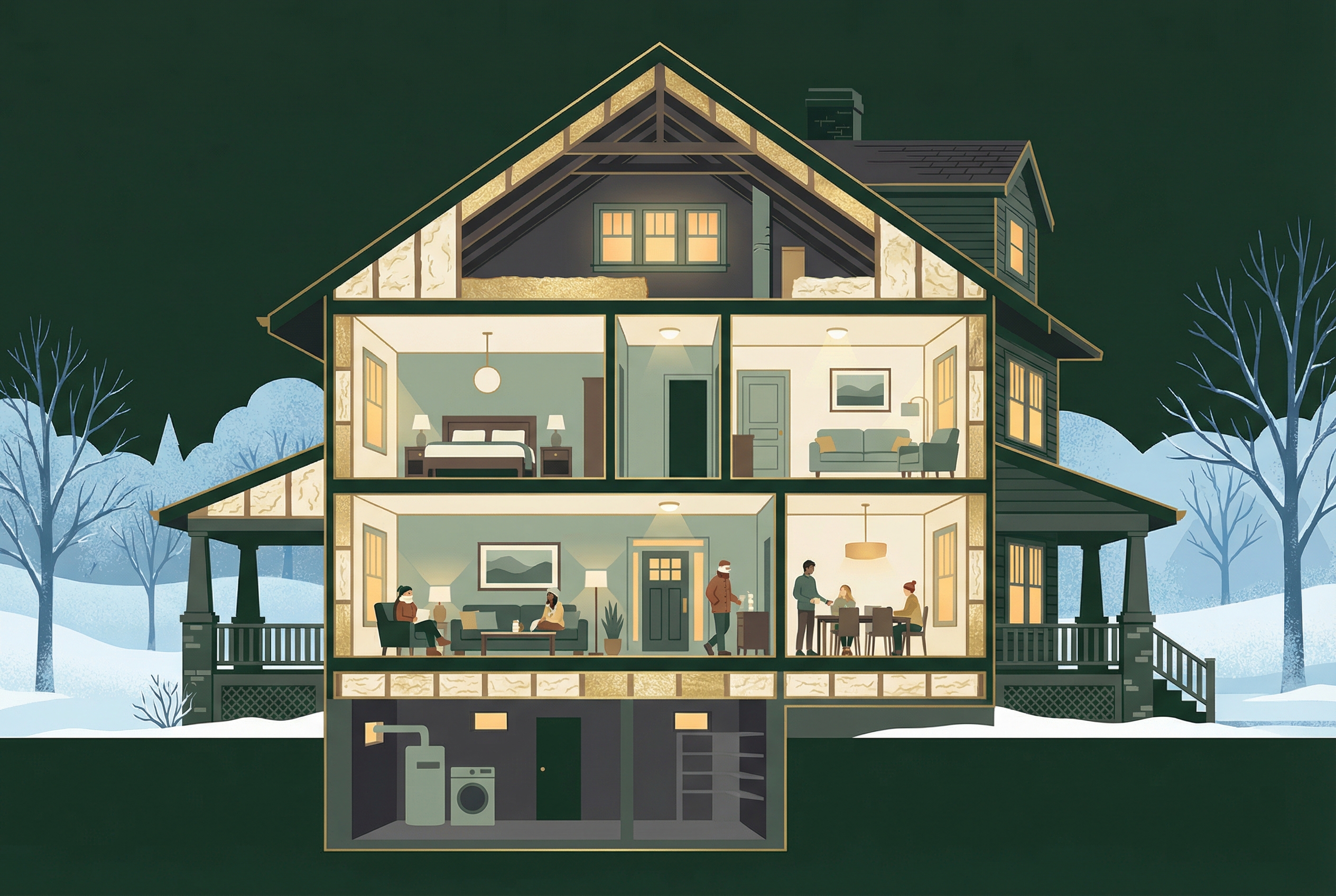
How insulation works
Insulation slows heat transfer across the parts of the house that leak comfort.
Whole-home insulation is about putting the right material in the right places so indoor air stays more stable through hot summers and cold winters. The goal is not just more insulation. It is smarter coverage, fewer weak spots, and a better performing shell overall.
- Attics, walls, rim joists, and lower levels each need to be evaluated differently.
- The biggest gains usually happen when insulation is paired with air sealing.
- The result is a home that feels more even room to room and wastes less energy.
Direct answer
What Does Insulation Actually Do?
Insulation reduces unwanted heat transfer so rooms stay more stable, upper floors are less extreme, and the home wastes less energy trying to stay comfortable. It is the foundation of home performance — the single most impactful envelope upgrade for most homes.
Who it is for
Signs You Need Insulation Work
- Rooms that are noticeably hotter or colder than the rest of the house
- High heating or cooling bills relative to home size
- A home built before the 1990s that has not been upgraded
- Ice dams forming on the roof in winter
- Visible gaps or thin insulation in the attic
Our Insulation Process
We look at where comfort is breaking down — attic, walls, basement, or crawlspace conditions.
Not every part of the home needs the same treatment. Smart scoping matters more than maximum coverage.
Air sealing and selective envelope improvements often make insulation significantly more effective.
What Affects the Scope?
- Where the home is under-insulated
- Whether air leakage is undermining performance
- The age, construction type, and condition of the house
- How the homeowner prioritizes comfort vs. efficiency vs. visible improvements
- Available incentives that may offset cost
How This Connects to Other Services
Insulation rarely stands alone in a high-performing scope. These related services help homeowners address the full picture.
Frequently Asked Questions
Is insulation worth it in New Jersey?
For many older homes, yes. The value shows up most clearly when comfort problems and missing or underperforming insulation are part of the issue. Most NJ homes built before the 1990s are significantly under-insulated by current standards.
What parts of the home should be insulated?
That depends on the home, but attic, basement, crawlspace, and exterior wall areas often drive the biggest comfort and efficiency issues. A home performance assessment identifies the priority areas.
Do I need air sealing too?
Often yes. Air sealing and insulation commonly work best together because uncontrolled air leakage can reduce the impact of insulation alone.
How long does insulation installation take?
Most residential insulation projects are completed in one to three days depending on the scope. Attic-only work is often a single day.
What type of insulation do you use?
We select insulation materials based on the specific application — including fiberglass batts, blown-in cellulose, spray foam, and rigid board. The right material depends on the location, access, and performance goals.